


- Disability Advocacy Methods: Carol Leish and Call Me Capable - June 15, 2026
- How To Use Capacity Building To Prevent Advocate Burnout - May 4, 2026
- Happy Activism: A Sustainable Way to Create Change Without Burnout - February 9, 2026
Last Updated on October 23, 2024
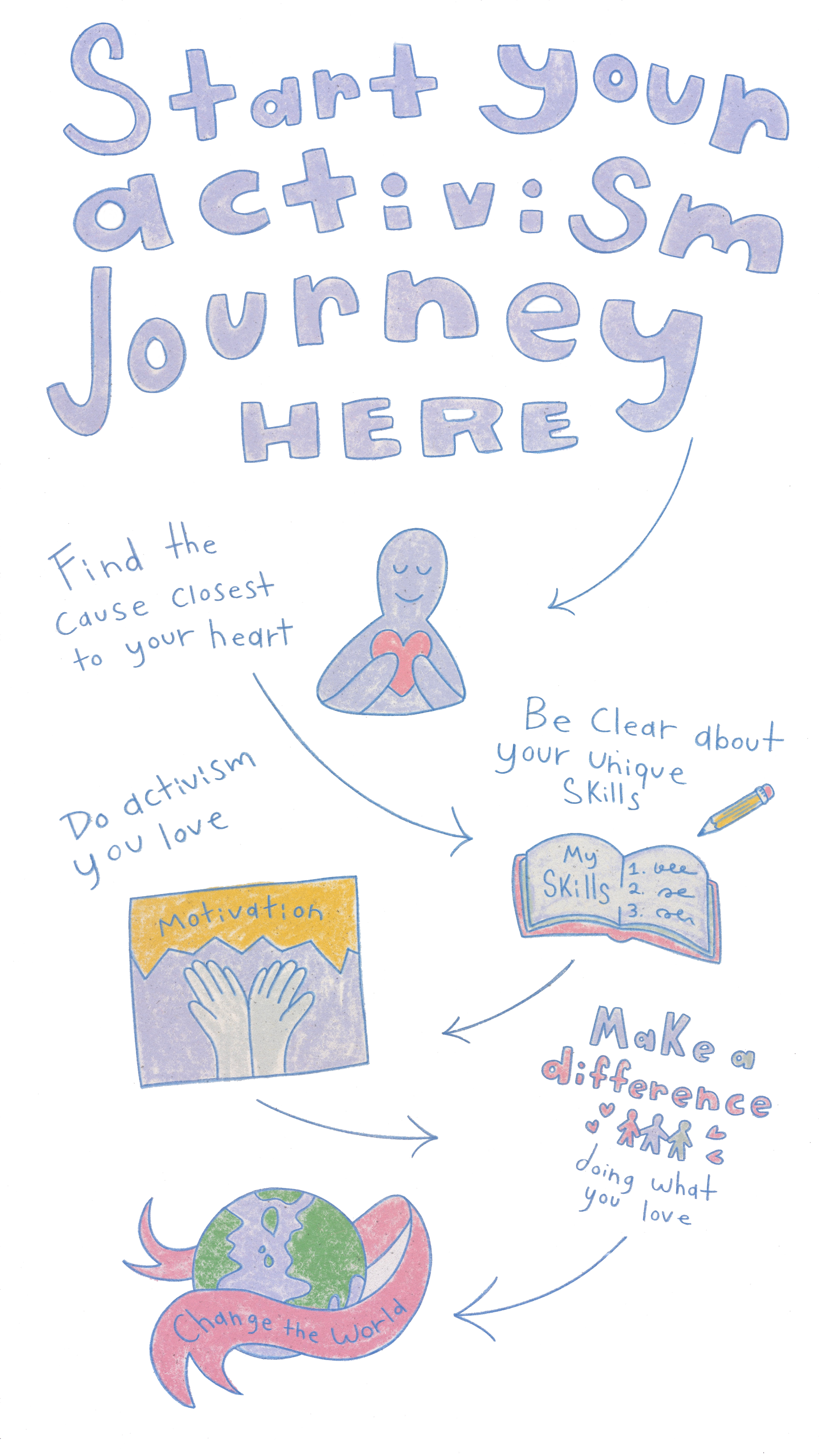 Here is what you will learn from What’s On Your Sign? How to focus your passion and change the world.
What’s On Your Sign? teaches you to become an activist. Use the activism path to find your passion and live your values. Think outside the box to match your unique skills to powerful social change. Make a difference doing what you love. Do your part to bridge the gaps in social justice. But rather than focusing on multiple causes, find the one closest to your heart. Your motivation will lead to effective activism. Don’t head to the streets. Instead, use your talent and skills for your cause. Today’s activists use art, music, public speaking, writing, teaching, and the power of the pen to change the world. You can, too.
A Research-Based Guidebook
 When I got off the sidelines, I was overwhelmed with work. So I decided to use my research skills to learn how to get started in activism and make the most impact. It took a while because I dug deep into the research from many different fields, such as psychology, business, and civic engagement. My manufacturing, government, and education background helped as I drew best practices from each area. I found that finding your passion leads to effective activism. From my research, I created my activism path, a way to find the cause closest to your heart and begin to change the world.
What’s On Your Sign? is Unique
What’s On Your Sign? is unique among books on activism: This book doesn’t tell you to head to the streets. It helps you recognize what you bring to the table that will positively impact your issue. Other books direct you to the author’s cause. This book lets you focus on your passion, so it applies equally well to all social justice issues. This book will inspire you to consider something more than marches. Activist profiles include the painter, singer, musician, children’s book author, playwright, craftivist, serial entrepreneur, and others, all using their talents to impact social justice.
What You Will Learn from What’s On Your Sign?
Here is what you will learn from What’s On Your Sign?, organized by chapter.
1: Identify the type of activist you are.
Are you an unexpected activist who wants to change the world but needs help getting started in activism? Have you confronted a situation that made you want to join the fight? You are an unexpected activist.
Or are you an unproductive activist who has been involved in social justice but isn’t sure whether your work is making an impact? If you need to focus your passion, use the tools in this book to check your impact, and connect with an organization that helps you grow.
Or are you an untested activist, who is clear about how they want to change the world despite just getting started in activism? An example of an untested activist is a teen who knows the impact they wish to make in social justice. Another example is an empty-nester who hasn’t had much time for social justice work but now wants to make an impact.
2: Find Your Passion
Create a vision of the change you want in the world. First, you will create a vision of your ideal life. Then, create a vision for an ideal world. The gap between your ideal and current worlds is the perfect place to focus your passions. Along the way, you will create your bucket list and decide what roles and values are most important to you.
3: Identify Your Skills
Identify your activism skills and the skills you can apply to activism. Remember times in the past when you’ve used activism skills. You will also identify skills that you can apply to activism right now.
4: Inventory Your Activism Knowledge
Having identified your passions and skills, here you determine the knowledge you bring to activism. Next, you assess your level of cultural competence and privilege.
5: Be Clear About Your Motivation for Activism
Assess your motivation for activism. You will identify your needs, so you stay motivated and productive. Because activism can be challenging, personal motivation helps you get through tough times.
6: Craft Your Ideal Activism Opportunity
Create a vision of your ideal activism opportunity, considering your skills, knowledge, and motivation. Consider whether you want to work with an existing movement or head out on your own.
7: Find Activism Opportunities
Review activism methods and choose those that motivate you. There is something for everyone. Possibilities include lobbying, fundraising, educating others, research, art, crafting, music, theatre, and writing.
8: Narrow Your Activism Options
Choose your activism path. Evaluate what you’ve learned about yourself and narrow down your choices of activism work. You will have a clearer picture of yourself and what you bring to activism.
9: Find Activism That Works
Find potential activism opportunities to make a positive impact on your cause. Use criteria to rank your possibilities and increase the likelihood of your effort paying off in positive change.
10: Choose Your Ideal Activism Opportunity
Choose and plan the start of your ideal activism. Your earlier work pays off as you make a final choice and use the tools to research opportunities and find the best match to make the change you want to see in the worl
11: Ensure Your Activism Success
Plan for maximum activism impact. Effective performance combines the right skills, knowledge, motivation, and circumstances. As you begin your activism, improve your odds of making a positive impact.
12: Stay Motivated
Stay motivated in your activism. Identify ways to stay motivated in your activism work using goal-setting and self-management tools. You will celebrate your accomplishments and adjust your goals if needed.
READ NEXT
Become an Activist: Learn More About “What’s On Your Sign” What People Are Saying About “What’s On Your Sign?”


