

- Disability Advocacy Methods: Carol Leish and Call Me Capable - June 15, 2026
- How To Use Capacity Building To Prevent Advocate Burnout - May 4, 2026
- Happy Activism: A Sustainable Way to Create Change Without Burnout - February 9, 2026
Last Updated on January 17, 2025
How to Choose Cruelty-Free Yarn
My sister-in-law taught me how to crochet. Penny is skilled in many crafts, so I was lucky to have her guide me. She started with three colors of yarn and no hook – just my fingers. It wasn’t easy at first, but in one setting I created a cowl to wear home on the plane. I was ‘hooked.’
Choosing Yarn
Crocheting appeals to my tendency to multitask; I can crochet while watching TV. But here’s the problem: how many hats and scarves does a person need? My family accepted a few offerings, but then they started dodging me when I asked what they wanted next.
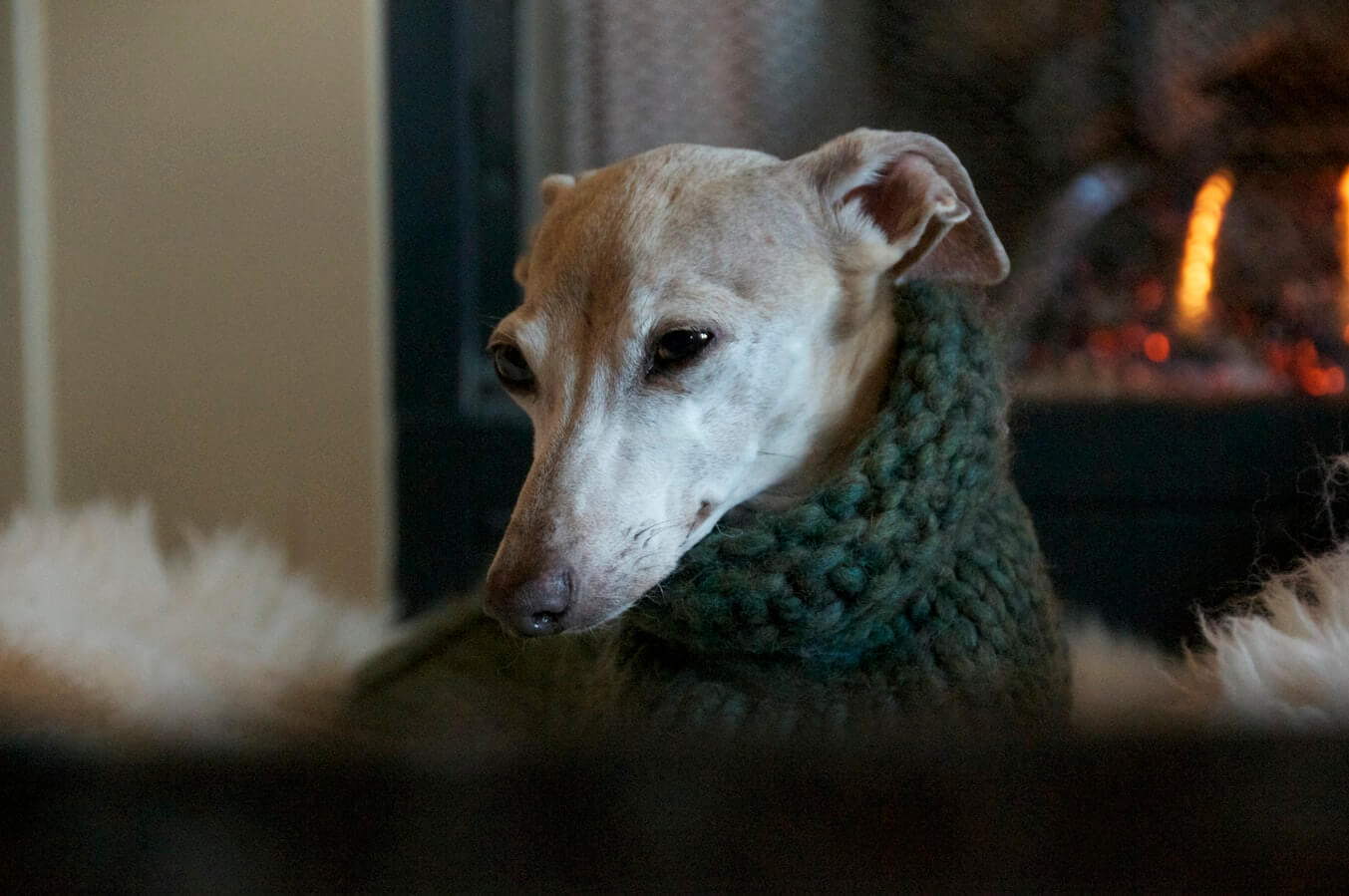
When I looked at the dog and wondered whether he needed a sweater, I realized I needed some direction. I decided on a practical approach. I would crochet a clothing item that wears out and must be replaced often – socks. But my first socks were awful – they didn’t fit right and were uncomfortable. So, I headed to Hook and Needle, my local yarn store. Hook and Needle is like an upscale country living room, where you can sit on a comfy couch and knit and crochet. And to look at the gorgeous array of colors and textures of yarn. The wall of yarn skeins is a work of art.
I asked the owner about a class on crocheting socks. She answered that crocheting and socks don’t go together. Well, that made me feel better about my dismal sock attempts. Changing my strategy, I asked about a pattern and yarn for a vest. She produced a pattern I liked, but then we ran into trouble.
She suggested wool. Now, I don’t believe in exploiting animals. I eat only plants, not meat or dairy products. No leather and no activities that involve working animals. But I hadn’t thought about animals and fiber. In the past, most of my yarn choices had been acrylic, mainly because it was cheaper and easier to use while I learned the craft. But in Hook and Needle, all the glorious yarns were animal fibers.
At the Intersection of Yarn and Consumerism
I’m usually more careful about my purchases. But standing in Hook and Needle holding the pretty wool yarn made me realize the moral implications of my yarn choices.
[Are you wishing to be a more conscious consumer? Start here.]
For safety, products such as drugs and toys are vetted before they arrive on a shelf. But unless you are aware of how companies produce goods and services, and how that fits into your values, you may be making purchasing decisions that cause harm.
I mustered up my courage and asked about the animals that supplied their yarn. Rather than looking at me like I had grown antlers, the staff was lovely. They spent a lot of time telling me about the fiber industry. The treatment of animals that produce fibers for yarn varies. Silk production is not humane. But other fibers are made from hair that is sheared off. That sounds pretty innocent, but some manufacturers do terrible things to animals to maximize the amount of wool produced. And many manufacturers don’t identify the source of their wool, so it is difficult to know whether they treat the animals well.
So, instead of wool, I purchased a lovely linen yarn made from flax for my vest. Then I went home to do some research. I wanted to be better informed about buying yarn ethically.
Humane Yarn
My research on the fiber industry paid off. Some manufacturers care about the treatment of animals that produce the fibers. And many are vigilant about how they treat their workers, too, prioritizing not just animal justice, but social justice.
[Browse the list of humane yarn manufacturers.]
But it is complicated to determine the best yarn – one that is ethical for people, animals, and the environment.
Sustainability
To be a genuinely sustainable manufacturer requires focus on all parts of the process, from how the creation of inputs to the final disposition of the material. For example, is the clothing compostable or will it linger in the landfill for years?
I learned about a clothing certification called Cradle to Cradle.
“To receive certification, products are assessed for environmental and social performance across five critical sustainability categories: material health, material reuse, renewable energy and carbon management, water stewardship, and social fairness.”
Sustainability means eco-friendly inputs, care of the environment, a living wage, and safe working conditions for employees.
Problem Yarns
I had no idea that the synthetic yarns I had been buying are terrible for the environment.
“While plastic-based fibres do not require agricultural land and use little water in production and processing, they do negatively impact the environment in other ways. Not only are synthetics not biodegradable, they all rely on the petrochemical industries for their raw material, meaning this fashion industry staple is dependent on fossil fuel extraction.” Independent
Egad. Another issue is the release of tiny plastic pieces into the water when you wash the clothing.
Well, I’ve also used cotton yarn. I can still use that, right? Not so fast. Unfortunately, cotton requires a lot of water and pesticides in its manufacturing process. Fortunately, some manufacturers are creating organic cotton yarn to bypass the pesticide issue. To be considered organic the producer must also meet animal welfare standards. But, organic cotton production still requires a lot of water.
And, of course, there are many issues with animal fibers. Interestingly, some manufacturers use cruelty-free wool, which, in addition to animal welfare, has advantages for the environment.
“In organic wool farms that practice ethical care, the sheep are pasture-raised and shorn once a year. The rest of the time, they are left to do their sheep things. Wool is also biodegradable, and the lifespan of wool is much longer than many other fabrics, such as fast-fashion cotton.
Wool gets washed a lot less in cold temperatures (often by hand, not machine), which means it saves water & energy, and doesn’t contribute to the microplastic leaching problem. Furthermore, all shorn wool is used—finer grades for clothing, and coarser grades for rugs, etc. All this makes wool perfectly in line with the slow-fashion, less-is-more consumer mindset that’s necessary for a cleaner fashion industry.” – Jennifer Kurdyla
Good Yarns
The most ethical fiber is recycled yarn. Since old clothing sent to the landfill creates environmental problems, reusing the fiber solves many issues. And no, a garment made from recycled fiber doesn’t have to look like a craft project. Manufacturers create beautiful clothing that you would never know is recycled.
Fibers made from plants bypass many animal and environmental injustices. For example, yarns made from bamboo, soy, nettle, jute, and flax are good choices. A new product called Tencel is made from eucalyptus. And check out this innovation – yarn called Pinatex, made from pineapple.
I was excited to read about products that companies have developed fibers to avoid the potential impact on animals. For example, to replace the silkworm, Bolt Threads has introduced engineered silk.
My Linen Vest
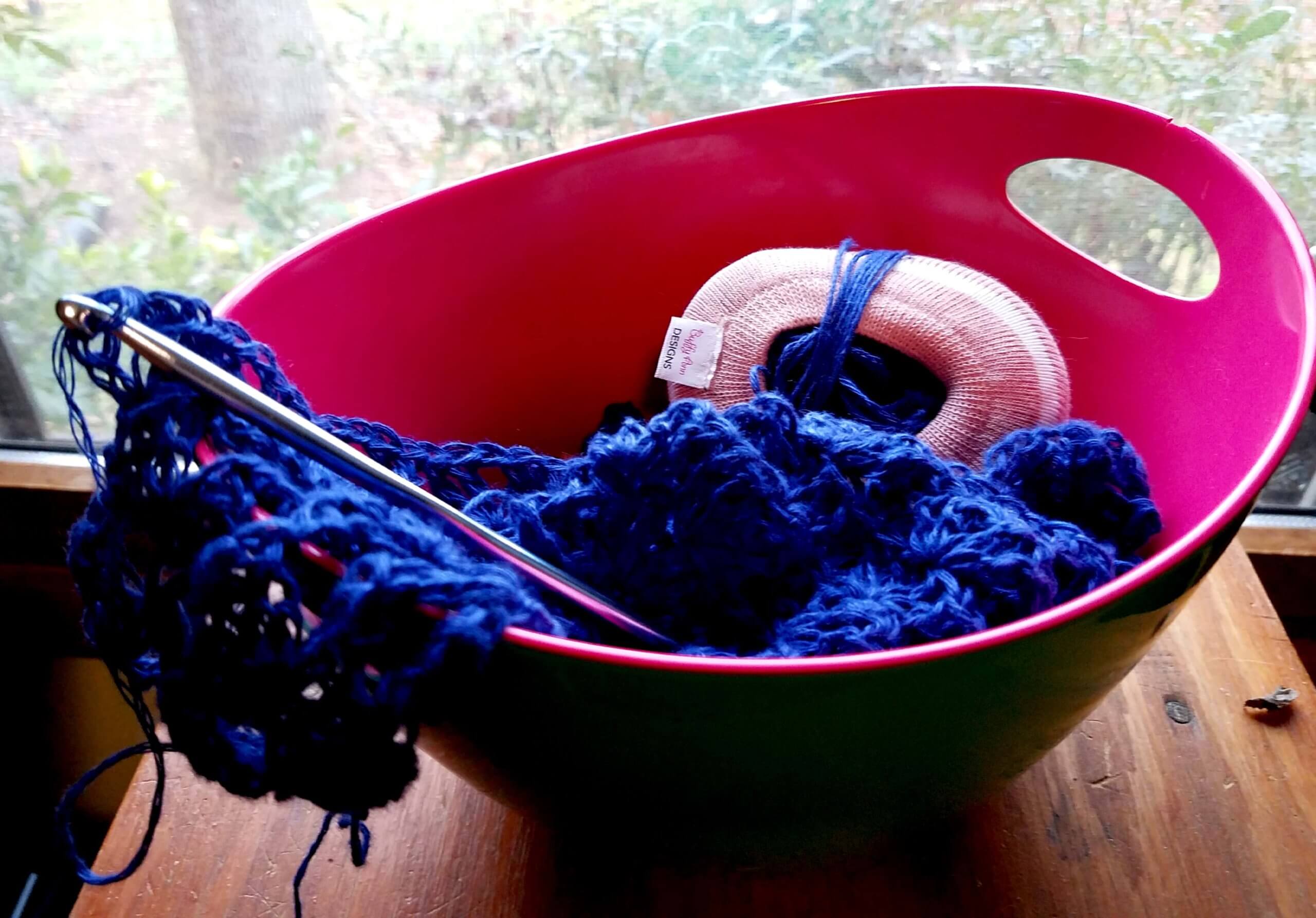 My linen vest is still a work in progress. As the Hook and Needle owner warned me, linen can be slippery. It tangles so easily I put the balls of yarn in little cozies. But since I want to be humane in all areas of my life, I’m glad for the option of this yarn, and for the choices I learned about.
I took my list of humane yarn manufacturers back to Hook and Needle, and she marked off the brands they carry. Thankfully, it is a long list. Check out some of these cruelty-free options. Some of the glorious skeins on the wall were humane, so I purchased a couple of skeins of gorgeous yarn from Manos del Uruguay. Manos del Uruguay is a nonprofit collective that supports rural women in Uruguay. The yarn is ethical and sustainable, and the company is fair trade certified.
And I left the list of humane yarns for her in case other crafters ask questions about yarn’s impact on animals, people, and the environment. I hope they do.
What do you think about using cruelty-free yarns?
READ NEXT
Where to Find Beautiful Cruelty-Free Yarn
Using Cruelty-Free Yarn During the Pandemic
Are You Excellent at Your Craft? Apply Your Obsession to Activism
At the Intersection of Diet and Climate Change
Learn about another area of consumer activism in At the Intersection of Death and Activism


Pingback: #SeniSal Roundup: Dec 9-13, 2019 ~ Esme Salon
Pingback: Where to Find Beautiful Cruelty-Free Yarn
I know there are issues, which is why I googled it and came to your post. I hoped it would give me the list that you compiled. Thanks.
Thanks for coming by, Nissa, and for caring about animals.
So…..where is this list?!
Here it is, Jane:
https://lifeattheintersection.com/2020/06/03/where-to-find-beautiful-cruelty-free-yarn/
Thank you so much! I am increasingly aware of the animal welfare issues in our society and in my horror at the thought of contributing to cruelty I realised I must discover if the wool I am using was once attached a to a happy sheep. I’ve emailed a lot of suppliers and await answers. Thank you for your work and care too.
Lilly bee x
Thank you for caring, too, Lilly!
I am so happy to find this website! I recently wrote to a large, American yarn manufacturer and asked if their yarn was cruelty free. I received a rather evasive response about their commitment to the environment and made sure their suppliers followed standard practices, but that didn’t really answer my question. I am grateful for the farmers out there who stand up for animal welfare.
Hi Suzanne, I’m so thankful, too, for those who care about animals. I’m excited about the potential for new products to replace those that harm animals. Thank you for stopping by!
Thank you for this resource. I’d love to know the sheep’s life expectancy in the cruelty free farms, because I wonder if, in the supposedly better facilities, they are truly allowed to grow old or not.
You are welcome! That is a good question, Marion. They likely live longer because they aren’t subjected to mulesing and other exploitation.
Pingback: The Best Gifts For Your Changemaker: Activist Gifts They'll Love
Pingback: cruelty free yarn
Thank you very much for sharing, visiting, and commenting on posts at the Senior Salon Pit Stop. I do not find a spot to share this post
Thank you, Esme.
Thank you for delving into this most complicated ethical topic! I have been on the search for adding new items to my handmade shop and was looking for sustainable development by way of yarns. I’m very pleased to have found your article. This certainly helps me make educated decisions about what fibers I want to use for my new products.
I too am excited about the future of what could be in ethical, eco-friendly sustainability. Have a lovely day.
You are welcome, Michelle! It is complicated, but I’m excited about the future, too. Best wishes as you work on your new products. Thanks for stopping by.
Pingback: How To Find Compassionate Vegan Gifts They’ll Love
Pingback: The Best Gifts for Vegans in 2022
Pingback: The Best Sustainable Gifts for Your Changemaker in 2022
Pingback: Find an Amazing Activist Gift They’ll Love. You’ll Be Tempted, Too